
TREASURY BANKING
Connecting Corporate Treasury to Third-Party Regulated Banking Infrastructure.
Cloud Storage
Process and/or store community investment data with Treasury to Bank technology to demonstrate captive financial operational compliance.
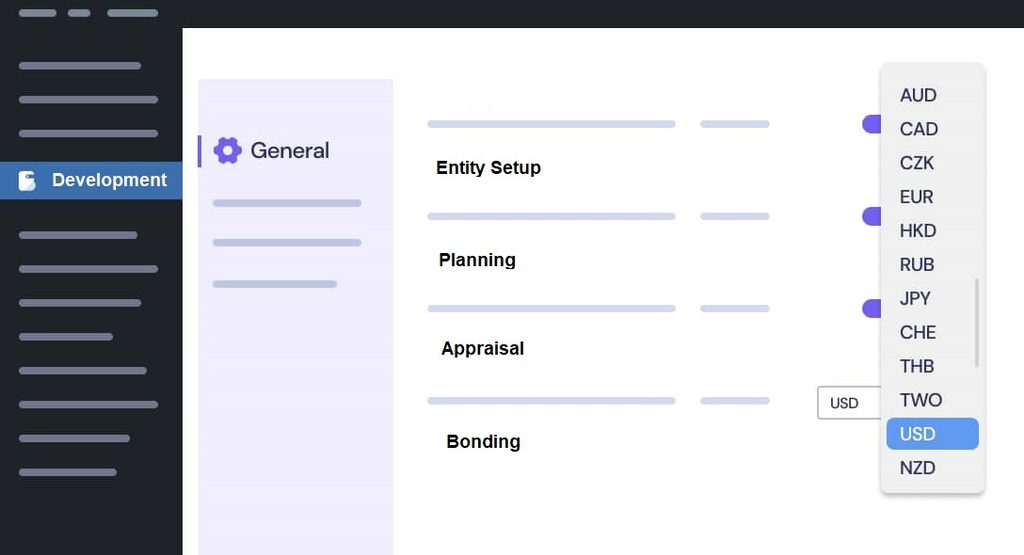
T2B
Treasury to Bank T2B is HSC’s inhouse virtual cloud based data bank for Protected Organizational Information (POI).
Moreover, it can utilize a H2H corporate treasury to Bank treasury integration to organize program related files, data management, storage and payment.
Internal Treasury
Controlled Environment
T2B provide a controlled environment that ensure the availability, security, and efficiency of a business’ data and applications. This is because T2B let organizations store data securely while scaling their operations and guaranteeing uninterrupted access to critical information.
T2B consist of several components needed to ensure HSC / MADIBA systems run smoothly:
- Cost-effective data storage
- Better collaboration with other organizations
- Consistent access to data
- Minimized risks associated with onsite storage
- Reduced hardware investment and associated cost
T2B can also support AI and other emerging technologies that require advanced computational power and storage capacity. Therefore, it safeguard the data that flows through its systems with strong physical and/or technical security controls.
Resources On Demand
T2B delivering computing resources over the Internet on demand by deliver access to MADIBA 369 underwrite and authorize community investment program and storage for numerous organizations at once.
Capitve Finance
T2B offer captive financing for corporate development, manufacturing, purchase or lease of the HSC’s products under specific federal regulatory exemptions.
Source of Proof
T2B has immutable source of proof and auditable recorded evidence, or data source that cannot be altered, deleted, or tampered with once it has been created and recorded. Because the record is permanently locked in its original state, anyone inspecting it can trust that the information is authentic and has not been secretly modified over time.
Key Characteristics
- Append-only: You can add new information to the record, but you can never erase or overwrite past entries. If a mistake is made, a new entry must be added to correct it, leaving the original mistake visible in the history.
- Tamper-evident: Any attempt to change the underlying data immediately breaks the system’s verification checks, alerting users that the proof has been compromised.
- Cryptographically secured: Modern digital immutable proofs use mathematical algorithms (like hashing) to create a unique digital fingerprint for the data. Changing even a single comma completely changes that fingerprint.
- Blockchain Ledgers: Third Party Backup transactions recorded on a public blockchain (like Bitcoin or Ethereum) are grouped into blocks and linked together chronologically. Once confirmed, a transaction cannot be reversed or edited by any single party.
- Write-Once-Read-Many (WORM) Storage: Specialized hard drives, optical discs, or cloud storage buckets (such as AWS S3 Object Lock) used by banks and hospitals to comply with legal regulations. Data written to these systems is locked for a set retention period.
- Physical Seals and Notarized Paperwork: In the non-digital world, embossed notary stamps, wax seals, and watermarked legal documents act as physical forms of immutable proof designed to show if a document has been altered.
Why It Matters with T2B
Immutable proof eliminates the need to blindly trust a middleman or record-keeper. Whether in financial audits, legal disputes, supply chain tracking, or software security, it provides an objective, permanent audit trail proving what happened and when it happened.
Regulatory Compliance
Regulatory is a key part of T2B management. Financial regulations prevent money laundering, protect data privacy, and create transparency. Noncompliance risks fines, reputational damage, and operational disruptions.
T2B Peform:
- Anti-Money Laundering (AML) and Know Your Customer (KYC): HSC coporates verifying clients’ identities and observing transactions for anything suspicious. Strong internal controls, regular compliance checks.
- Data protection and privacy: T2B maintain strict control over how sensitive financial data is stored, processed, and shared, to stay in compliance with laws such as the EU’s General Data Protection Regulation (GDPR) or the California Consumer Privacy Act (CCPA).
- Sarbanes-Oxley (SOX) Act compliance: SOX T2B maintians solid internal controls and accurate reporting to prevent fraud in publicly traded US companies. Maintain detailed documentation, clear audit trails, and proper approvals for all transactions.
- Foreign exchange and derivatives regulations: T2B manage foreign exchange and derivatives in accordance with rules such as the Dodd-Frank Act in the US or the European Market Infrastructure Regulation (EMIR).
- Accounting standards: T2B meet global financial reporting standards such as the International Financial Reporting Standards (IFRS).
- Sanctions and embargo compliance: T2B comply with rules from government agencies such as the US Office of Foreign Assets Control (OFAC), to ensure they aren’t transacting with sanctioned entities or countries.
External Bank Integration
Pipeline
T2B pipeline utilizes a hybrid Treasury Management System (TMS) with native MySQL, JSON, and XML data pipelines to maps with Bank’s API-driven architecture.
T2B operates natively as a real-time REST API, instance’s to bridge Auto Action Buttons to automate execution, ledger mapping, and balance reconciliation without human middleware with programmatic ledger:
Mapping
T2B uses relational MySQL tables to other external immutable ledger objects.
A. The Entity Mapping Layer:
- “Entity” (e.g., Projects/Clients/Subsidiaries) → Map to external Accounts or Virtual Accounts.
- “Transactions” Table → Map to external Bookkeeping Entries or Simulation Transactions.
B. The Dual-Entry Principle:
T2B features a internal, double-entry bookkeeping API engine. T2B Auto Action Button writes to its local MySQL database and fire a JSON payload to external’s bookkeeping endpoints simultaneously, guaranteeing your internal ERP and your real-time bank ledger never drift out of sync.
Payload
T2B’s Auto Action Buttons allow it to change item statuses and trigger external API calls. When HSC treasury managers clicks “Approve & Execute Payment” inside T2B, it execute the following sequence:
[ User Click ]
▼
[ MySQL Record Status Changes to ‘Approved’ ]
▼
[ TMS Outbound API Rule Executes ]
▼
[ JSON Payload sent to Increase Endpoint via cURL/PHP ]
Endpoint
The JSON Target Endpoint Structure
To handle corporate payroll or vendor disbursements via an Auto Action trigger, T2B webhook/API configuration will target bank’s ACH endpoint using a standard JSON payload:
json
{
“account_id”: “account_in71sc99uiwffg”,
“amount”: 1050050,
“statement_descriptor”: “VENDOR PAY INVC-992”,
“funding”: “checking”,
“effective_date”: “2026-11-03”,
“routing_number”: “123456789”,
“account_number”: “987654321”
}
(Note: Specifies amounts in cents, meaning $10,500.50 is sent as 1050050 to mitigate float and rounding errors in the MySQL definitions.)
3. Handling Incoming XML/JSON Data Streams
Data Streams
T2B requires automated inbound ledger reconciliation using Bank Webhooks.
- The Setup: Configure an event listener in the Bank for ach_transfer.submitted, wire_transfer.created, or bookkeeping_entry.created.
- The Execution: The Bank will post a JSON notification back to T2B XML/JSON API endpoint.
- The MySQL Update: T2B API receiver parses the incoming JSON, looks up the corresponding unique ID in T2B MySQL database, and updates the T2B transaction record status to “Settled” automatically.
4. Technical Implementation Checklist
- Data Type Sync: Ensure your T2B field types for payment values are configured as large integers (BIGINT in MySQL) rather than standard decimals, aligning perfectly with Bank’s cents-based API constraints.
- Idempotency Keys: T2B Include a unique transaction UUID from it MySQL table inside the Idempotency-Key header of the Bank’s API request. If HSC treasury team member accidentally multi-clicks the Auto Action button, the Bank safely rejects the duplicate request, completely eliminating accidental double-payouts.
- Authentication Security: T2B Secure the connection by storing it’s bank assigned API Bearer token securely on its hosting server environment variables rather than hardcoding it directly inside the T2B workflow configuration screens.

Digital Solution
Dematerialized and centralized digital asset with API methods

Professional Accountability
IFRS, IAS, and GAAP methods with CPA audit results

Data Banking
Validated data with certified timestamps, and documented source of proof
Sale Community Programs International
International T2B allow members to:
- Exporting: Selling local physical goods or digital services directly to overseas buyers through online marketplaces or freight channels.
- Licensing & Franchising: Allowing international partners or franchisees to use your local brand name, operating system, or intellectual property in exchange for royalties.
- Joint Ventures (JVs): Partnering with an established local entity in the target foreign country to share ownership, costs, and market knowledge.
Key Platforms & Resources
- B2B Trade Networks: Use global sourcing and wholesale directories like Alibaba, Global Sources, or Global Trade Plaza to list community products and and services to find international distributors.
- Government & Trade Assistance: Leverage federal or state programs such as the U.S. Small Business Administration (SBA) or the International Trade Administration for export, training, and market intelligence.
- Market Intelligence Tools: Research cross-border demand and tariffs using databases like
Investment Market Value
The global data center market is valued at $383.82 billion (2025) and projected to reach $902.19 billion by 2033
Market Size & Growth
- Cloud Data Center Sector: Valued at $35.26 billion (2026), scaling to $59.55 billion by 2030. Business Research Company
- Overall Data Center Spend: Global spending tracks toward $600 billion. reddit
- Capacity Explosion: Global capacity is projected to double from ~100 GW to 200 GW by 2030. JLL
- Regional Split: The Americas represents 50%–59% of global capacity/investment (US drives ~90% of the Americas), followed by APAC and Europe. Yahoo Finance UK
Core Growth Drivers
- AI vs. Traditional Cloud: Non-AI demand grows 1.7x (38 GW to 64 GW by 2030); AI demand grows 3.5x (44 GW to 155 GW), making up ~70% of total demand. Mckinsey Global Institue
- Hyperscalers: Dominated by AWS, Microsoft Azure, Google Cloud, Meta, and Apple, expanding gigawatt-scale AI/cloud campuses (e.g., Google’s $15B Missouri campus commitment). Yahoo Finance UK
- Security & Software: The Cloud Base Security Software Market is valued at $42.8 billion (2026) and heading to $65.3 billion by 2030 (11.1% CAGR)
The cloud offers covered entities the chance for significant growth, allowing them to focus on other patient-related tasks and proper patient care.
Risks of Using T2B
While T2B provides some advantages, it also introduces risks related to data security, privacy, technical challenges, and service reliability. Cyberattacks are conducted against cloud-based providers as much as physical entities because of easy access where cybersecurity is lacking.
Known cloud security risks center on data security, loss, and sharing along with compliance and collaboration issues, such as:
- Greater attack surfaces for unauthorized access
- Increased data breaches
- Shared responsibility over security
- Accidental data deletion
- Uncontrollable service downtime
- Data ownership and control issues
- Collaboration challenges
Data security
Community or government organizations are responsible for ensuring that their cloud business associates implement effective data security to support cloud activities. Depending on the needs of the provider and the organizations it works with such cybersecurity may include the following cloud-related safeguards.
Access controls: Implement multifactor authentication (MFA) to enhance user identity verification.
Data encryption: Employ encryption for data at rest and in transit so that even if accessed by an unauthorized party, the data remains unreadable.
Regular audits: Conduct regular audits and continuously monitor systems to detect and respond to unusual activities promptly.
Separate data backups: Maintain regular and redundant data backups, classifying and storing data separately, depending on the information and its needs.
Retention policies: Understand and configure data retention policies based on both the provider and the covered entity.
Data controls: Maintain clear visibility and control over where data is stored within the cloud and how.
Disclaimer: Treasury to Bank T2B is not a license register bank. It does not provide general banking product as deposit-taking, lending, investment advisory, or other regulated financial services. It provides in-person or online services that’s built for real-world planning research and development, corporate finance, liquidity, risk, and more.